Friday, April 1st dawned hazy and warm. With the help of our friends at Harbour Cay Club, we locked up
Dream Catcher, loaded our last parcels and ourselves into the dingy and sped off to our new home for the next two weeks. We arrived onboard
Cutter Loose at 9:15am. Once aboard we quickly stowed our gear, weighed anchor and headed southwest through the Seven Mile Bridge and into Hawk Channel. Hawk Channel is the waterway between the Florida Keys and the reef that runs along the east side of the Keys for over 100 miles from Key Largo to the Dry Tortugas.
We hoisted the mainsail, which on this boat meant crank the winch to unfurl the sail.
CL is equipped with an in-mast-furling main sail system. Nice! We had been watching weather very closely, as sailors do, and decided the best plan was to cross to Cuba on Saturday rather than the following Monday - the designated cruiser's race start. The wind was very light. So, we motor sailed all the way to Key West where we had a reserved slip for the night, arriving at 3:45pm. The 87 degree heat forced us up to the marina pool where we found a couple of hundred young people standing in the water, drink in hand, hanging at the pool bar, and pounding DJ music that could be heard for miles around. Whew! We were easily the oldest folks there. But, when in Rome...we each grabbed a
"Pain Killer" and hung out in the shady area of the pool for some really interesting people watching! That gal dancing with the DJ was really something! After a shower and a lovely dinner on board created by Chef Pat, we headed off on foot to
"Better Than Sex" (you should check out the website for a kick!) for an amazing dessert finish to a wonderful day.
(Please note that there are many hot links throughout this missive. They are blue or purple and underlined. If you are curious for more information, click one and it will take you to an information source about that topic.)
(Click photos to enlarge)
 |
| Pool at Conch Harbor Marina |
 |
| Eric enjoying his dessert |
 |
| The coffee is rimmed with white chocolate! |
Saturday was a day to get any last minute items completed before the big trip. After a long walk for a breakfast pastry, we stocked up at CVS and did a last grocery run. Then we settled in to prepare to cross to Cuba. At 5:30pm on Saturday, April 2nd,
Cutter Loose pulled away from the dock, motored out of the harbor and headed to the Sea Buoy off Key West to open water. A hazy sunset later and trailed by a Disney Cruise Ship, the humid air followed us into the Florida Straits and all the way across the
Florida Current (which is considered to be the beginning of the Gulf Stream system) to Cuba 100 miles away.
 |
| Red and blue show higher speed currents |
The auto pilot syncs with the chart plotter when you enter the command "Go To Waypoint" and is supposed to track your course to a set waypoint. In this case, the waypoint was the Sea Buoy outside the entry channel to Marina Hemingway, about 8 miles West of Havana, Cuba and 90 miles away. But, the current kept setting us too much to the East and the instruments were having a tough time keeping us on track. Therefore, we simply went manual with the auto pilot and corrected by tapping -1 or +1 alternatively to keep us headed toward the waypoint. We each pulled a two-hour night shift at the helm, allowing a nice amount of time for the others to rest. Having four crew members on one overnight passage was a luxury. We all got plenty of sleep and had an uneventful crossing. It was interesting, however, to see the amount of shipping traffic using the channel. At one point, we noted six ships within a ten mile range of us. Thank goodness for the AIS system that shows a signal on the chart plotter when a commercial vessel is within a 20 mile range. In the first picture the small red and blue icons represent 600 foot long tankers. Together with RADAR, which is always used at night, we can "see" any commercial traffic close to us, including calculated detail about their speed, distance from us, heading, CPA (closest point of approach) and TCPA (time to closest point of approach). Using this information we can adjust course to steer well clear of these big guys, and anyone else in our path.
 |
| Florida Straits AIS |
 |
Key West and
Miami area AIS morning of 4-22 (as an example) |
By 8am Sunday morning, the coastline of Cuba was in sight. But, as early as 3am when Sharon was on watch she could smell land. There was a slight hint of burning - chalked up to maybe a burning dump - that was blowing north on the night air. A red crescent moon was slipping into the eastern ocean at about the same time. It was a lovely night for a crossing.
At 9am, Captain Eric called Marina Hemingway on Channel 77 and was directed into the well-marked channel (although the marks look a bit different than those in U.S waters) and we pulled up to the Customs dock to clear in. The folks were friendly and accommodating. We were very happy that Captain Eric had such good Spanish language skills - it made our lives easier in so many ways the entire time we were in Cuba. We completed the appropriate paperwork for each of us and were visited by a female medical professional who took our temperature by placing an automatic thermometer upon our forehead. We were asked a few questions by the officials, then took our passports into the office, had a photo taken, got the passport stamped and were on our way to our assigned dockage. There are four canals in this marina (no slips as we know them, all face docks). We were directed to canal one, slip 126. This canal was directly next to the seawall which meant we could always see the ocean and were most vulnerable to the winds. But it ended up being a great location that provided us with a welcomed breeze all week. The rest rooms were only 250 steps away(ha)! And odd characters were living on the the boats fore and aft of us. One of these characters told us he was a French Diplomat. Indeed, he and his wife spoke French, and they had seven dogs to walk every morning, but we were skeptical about the Diplomat part. Lots of odd people at this marina!
Once tied up, we were visited by the Agriculture Ministers who wanted to know if we had any fresh produce on board. They then asked to see inside the frig which we gladly showed them. Captain Eric gave them a $20 tip "to support their families" and off they went with smiles. After the two Agricultural Ministers (both named Roberto by the way) Miguel, the Dock Master, came aboard to discuss the dockage rates and information. By this time, we had already plugged into shore power and had the air-conditioning running - Sharon was thrilled as it was nearly 90 degrees and humid! We had not expected to be able to use Cuba's shoreside electric power due to the concern of a different electrical current. We were very happy to see what looked to be fairly new pedestals (the contraption a boat plugs into on the dock that supplies both electric and water) and were very gratified to be able to charge our devices, have A/C and live so well on board
CL.
 |
| The Sea Buoy marking the entrance to Marina Hemingway |
 |
| Capt Eric (or "El Capitan" as we called him) |
 |
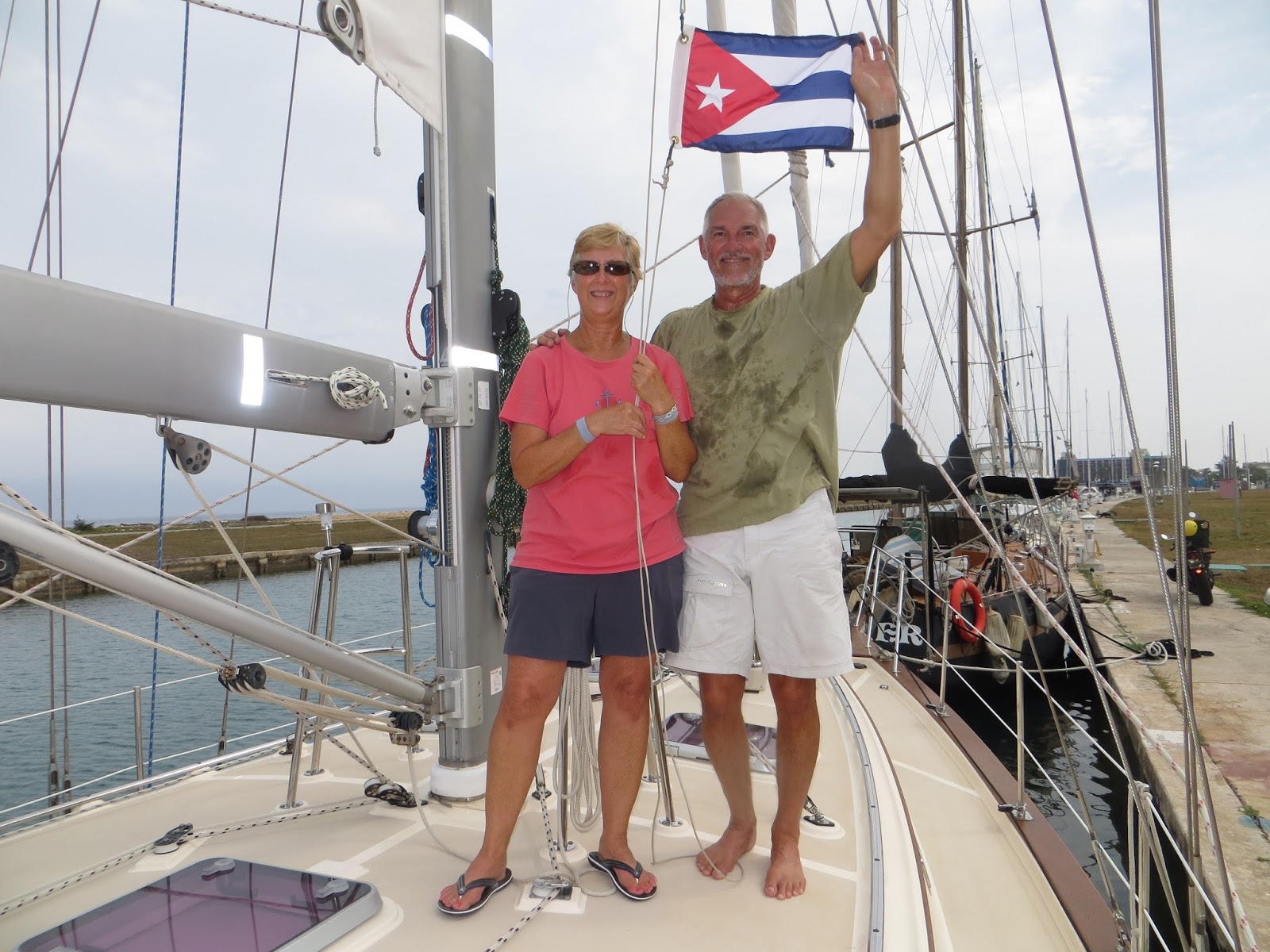
Hoisting the Cuban Courtesy Flag - can you tell it's hot?
|
 |
| Our home for the next week or so |
 |
| The View from our home |
 |
| The sea wall to the North of us |

Before we embarked on this adventure we did a lot of reading and talked with a lot of folks that had been to Cuba. So we were well prepared for the curious lack of toilet seats, toilet paper and paper towels in the restrooms. With our "potty bags" in hand, we trotted off to the Snack Bar, aka Ladies and Gents station, to see what was in store for us. It wasn't as bad as we expected. Three of the six toilet stalls in the ladies room had seats and all had doors. There were four shower rooms, two with doors. We found the biggest issue to be the plumbing itself. Sometimes there was no water in the tank, therefore, no flush. Sometimes, the toilet might act as if it was flushing, but not go down. So, each morning, the challenge was finding a toilet with a seat, that flushed. There were also plastic waste cans in each stall in which you were to dispose of your tp - bad idea to send it into the toilet if you wanted any chance of it flushing. As you might imagine - by the second day of our time in Cuba, we started rating our bathroom experiences. The lack of toilet seats and toilet paper is pervasive throughout the city of Havana and throughout the countryside. In restaraunts or hotels you might find a person giving you several folds of tp on your way into the restroom, expecting a small tip in exchange for this luxury. But rarely would you find a toilet seat. A toilet seat, tp, hand soap, drying towels and a good flush rated a five star bathroom experience. Kind of interesting that a country that produces one doctor per 125 people cannot get their plumbing working properly. It seems that the plumbing, electrical and structural elements of most buildings is in such bad repair that many have had little or no maintenance for 50 years. Parts are unavailable. Money to buy parts is scarce. The result is eerie, almost like a Mad Max movie.
 |
| Snack Bar - Rest Rooms |
 |
| Looks OK until you turn on the tap |
It is interesting how we can get used to most anything over time. This was a topic of conversation throughout our visit, as we noted how the Cuban people have adjusted in their daily lives to living happily just above poverty level.
Our trip was equal parts time on our own and time with a group tour. We were happy for both of these. The tour guides shared with us a great deal about the history of the country, their daily life, their take on their government and way of life, and showed us places we would not have seen without a guide. We had comfortable buses to take us to and from different areas and got in a fair bit of walking as well. While on our own we were able to explore areas where the tour guides did not take us. We set down at least 20,000 steps a day on back streets in the city and through small villages. We talked with the people as much as we could - cue Eric's excellent Spanish - and tried to see things through different eyes.
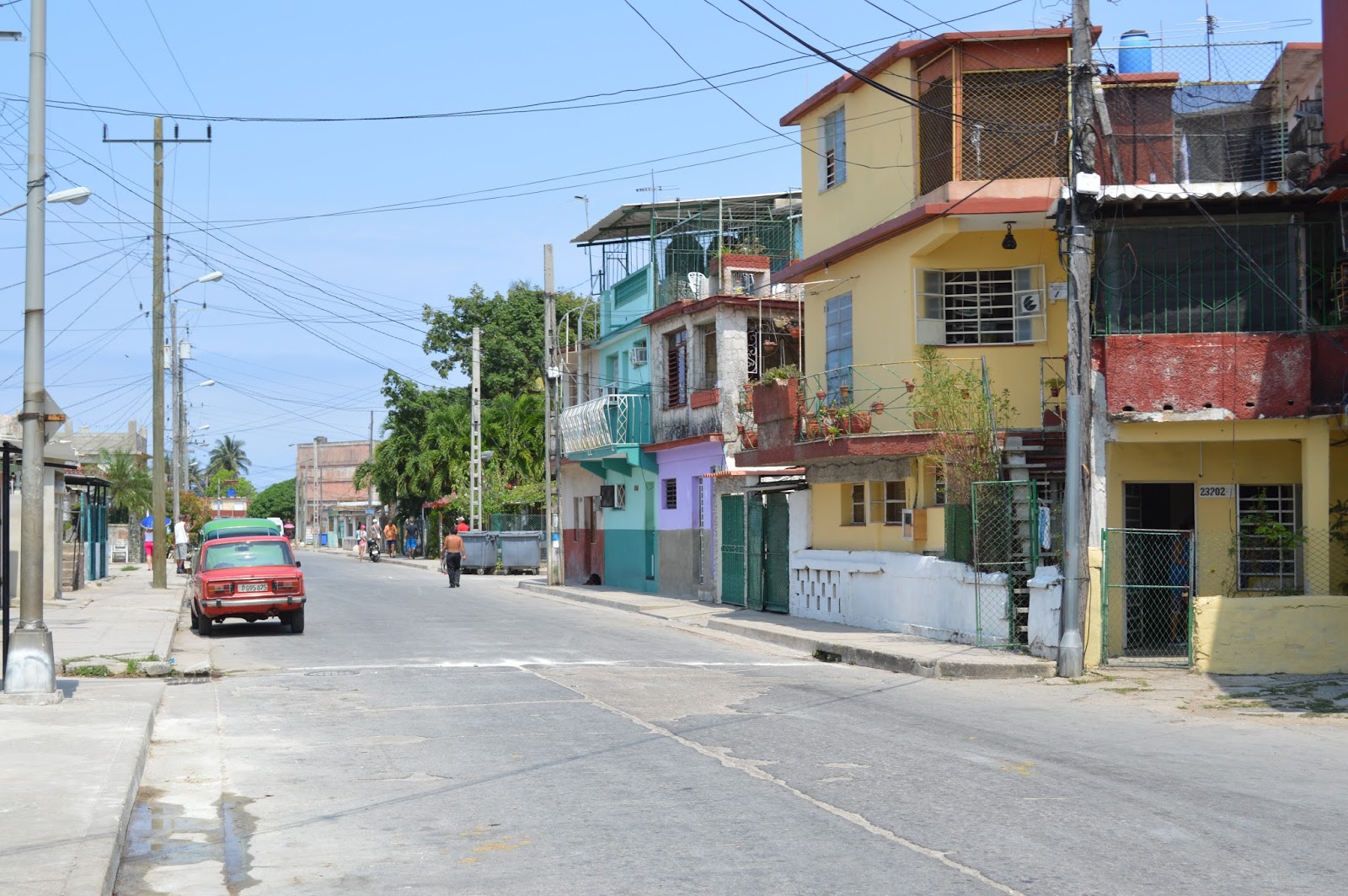
Because we got there much before the rest of the group, we had a couple of days to explore on our own. We walked from the marina to a tiny village a mile or so away called Jaimanitas. It seemed to us to be pretty poor as you can see from the photos. The Cuban people have some food provided by the government, own their home (though not the land it sits on) and have free medical care, but the quality of living seems quite lacking compared to the USA. On the other hand, Cubans live better than their peers in many South American countries where violent goverments still rule, and better than many small Caribbean islands where infrastrcture and public services are almost nonexistent.
For the most part Cubans are happy, kind and welcoming. And they loved seeing people from Estados Unidos.
We loved walking the streets of Havana. There is so much to see: the cars, the beautiful buildings, the rundown buildings, the streets filled with people, the squares filled with history, the broken down sidewalks, the charming "Paladars" (privately owned restaurants), the swanky hotels and bars (government owned), the street performers. We ate at several Paladars, but the menu was almost always the same each time - fish, chicken or pork with rice and beans, a salad made with shredded white cabbage, thinly sliced cucumber and a few tomato wedges. Our average bill for a meal for the four of us was about $40, including a beer or cocktail. Daiquiris were $2.50 - a steal by U.S. standards. Rum is cheaper than water throughout the Caribbean islands., including Cuba where the national brand is Havana Club.
There are two currencies in Cuba - tourist dollars known as CUC and Moneda Nationale. CUC is Convertible Pesos and this is the currency all tourists must use. Our exchange rate was 87 cents on the dollar due to the 10% fee tacked on to U.S. currency. Tourists from other countries only see a 3% fee. We took $4,000 in cash with us, between the four of us, and came back with more than half of it. U.S. credit cards are not welcomed yet, although we hear that may soon change.
We had four days of bus/walking tours. Two days were spent in Old Havana where we saw many historic sites, visited a cigar factory, browsed the Artisans Market, and enjoyed lovely lunches with the group. Another tour day included a trip to
Ernest Hemingway's home, where his fishing boat "Pilar" still sits in the shed, the village of Cojimar where he fished regularly, and the
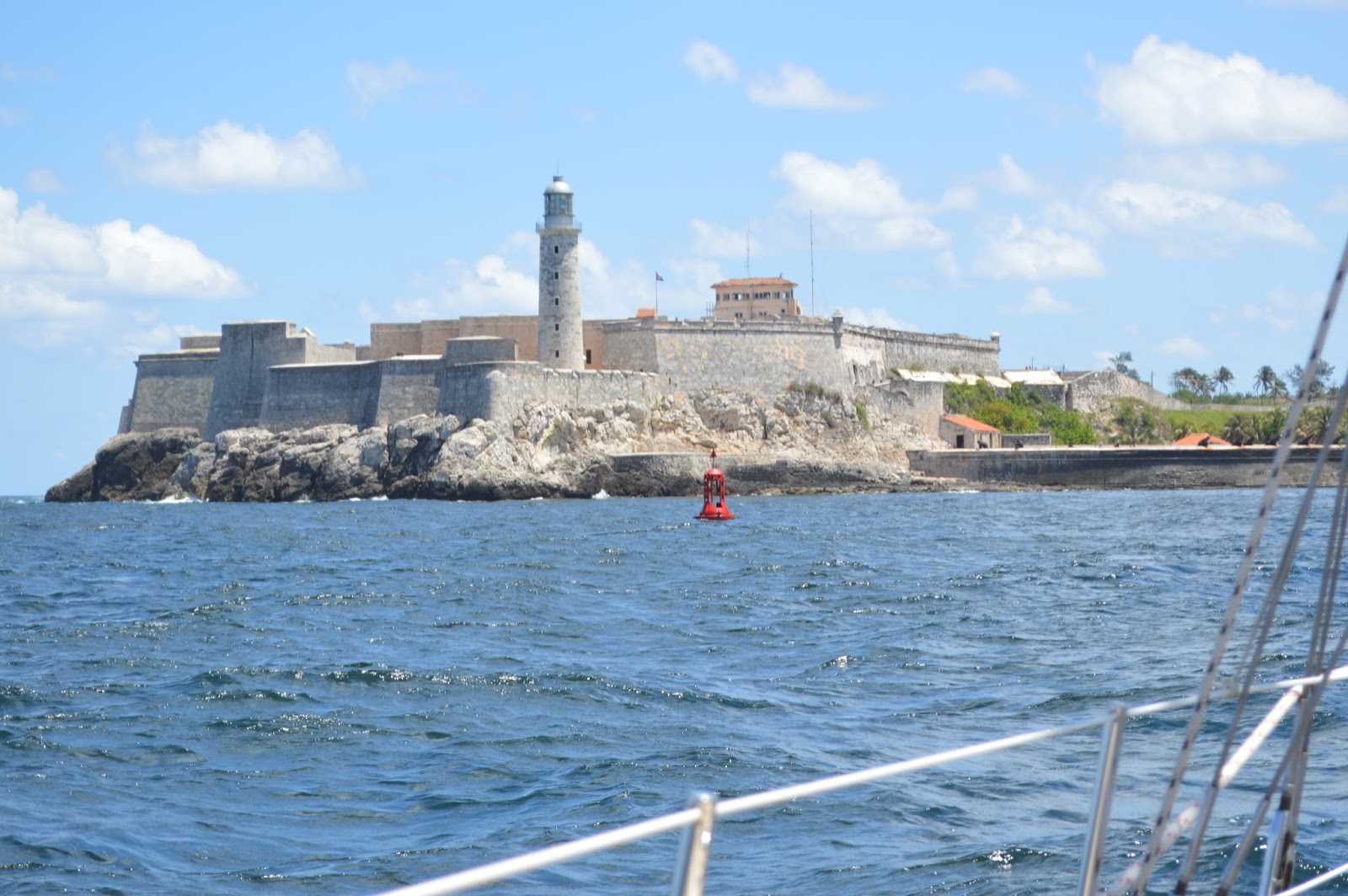
El Morrow Castle and
Hotel Nacional back in Havana. The last planned tour day took us out into the countryside to Vinales in the western part of the island. Our guides were government employees who were well-informed on the history of the country and were able to show us places that would have been very hard and time-consuming to find. Yes, they gave us the version of what the government wanted us to hear, but if asked for their personal opinions they were very forthcoming. The young people of the country are less enamored with their leaders and are hopeful for change that will move them more into the 21st century. Already wifi has come into the country and you could see the young people on their smartphones in public areas near hotels - some of the few public WiFi enabled areas. It remains to be seen how much information will be available from the network. We were able to purchase wifi cards at the hotel at the marina for $2 for one hour's time and were able to navigate the network freely, including Google searches.
The guides were also very helpful in assisting us with any individual excursions we wanted to add to our schedule. We were fortunate enough to get to
The Tropicana Club for a show and had front row seats. Our elbows were literally on the stage! The ticket price included a table with a glass of champagne each, a half bottle of Havana Club rum, four Cokes and bar snacks. The show started at 10:00pm and went for over 90 minutes non-stop, including an invitation to join the dancers on stage after the formal show (which we politely declined). It was a spectacular event and if you visit Cuba you should definitely go to The Tropicana!
(Click to enlarge)
 |
| OMG! |
We were part of a group tour that was planned and sponsored by the Sarasota Yacht Club. Club Nautico is the one large yacht club in Cuba and it hosted our group along with one other US yacht club during our visit. They hosted a welcome gathering for everyone on Wednesday night including an open bar and heavy hors d'oeuvres. It was quite lovely. The Commodore for the Yacht Club made a very impassioned speech welcoming us all and letting us know how important it was for them that we were visiting Cuba. He spoke through an interpreter and made sure we understood how important it was to Club Nautico, and his position of Commodore, to get the attention of his government, so that the marina could continue to exist and improve its services. It was a very moving speech. He even planned a Regatta and all the visiting boats were encouraged to participate the following Saturday. So, on Saturday, we all headed out of the marina with a temporary check out at Customs and east toward the start of the race course. We raced up to the entrance buoy to Havana Harbor and back, about nine miles each way. It was a beautiful day to be out and fun to get to see the city from the ocean. At the end of the day there was another celebratory dinner at Club Nautico where awards were given.
(Click photos to enlarge)
 |
| Commodore Diaz Escrich of Club Nautico |
 |
| Mark for our turn in front of El Morro Castle |
 |
| Pat tending the jib |
 |
| The US Embassy on the right |
Our trip to
Vinales took us on a six lane highway that was in amazingly good shape. We traveled along at 100km/hr and made our way two hours west of Marina Hemingway. The countryside was wide open. We saw many sugar cane fields, a couple of chicken farms, and lots of open land. We stopped at a tobacco farm to see how the tobacco is cured, although this visit was very "staged". We passed a huge mango grove. We visited a cave made by the limestone
Mogotes and were able to walk through this cave and take a small skiff along the underground river. This was almost the site of Spielberg's "Jurassic Park" but he and the government could not come to terms with the production company. It was very special to be able to get out in the countryside and see the oxen-drawn plows, horse and buggy transport, and people working in the fields and villages. Everyone was friendly, pleasant and happy to see us. Some of this was like visiting a national park in the US, where live displays were staged so that visitors could get the feel for the topic. Think Plymouth Plantation or the Flume in NH. Even so, the rich history and culture was evident.
(Click photos to enlarge)
 |
| Curing Tobacco |
 |
| The Cave |
 |
| Tobacco |
 |
| Mogotes |
Our friend, Pat Fulmer, co-owner of Cutter Loose, put together a photo essay of our trip and included some of the best pictures from all of our camaras. She posted it on YouTube and here is a link to it. It is about 11 minutes long, so make sure you have time to view it. The photos are pretty good!
https://www.youtube.com/watch?v=ot0A2uJeMyE
Following are more photos that are different from what she used in the video. Enjoy!
At Hemingway's House
Walking the streets of Havana
 |
| The Logo of Havana Club Rum |
 |
| Havana Libre' Hotel (used to be a Hilton) |
 |
| Enjoying a Cuba Libre' |
 |
| Enjoying a Daiquiri at a charming Paladar |
There is still so much to tell, but we think we have gone on too long. Questions, comments and calls are welcomed. It was an amazing trip. We recommend it to anyone interested in international travel. The quote our friend Pat Fulmer posted on Facebook is so true:
"Travel is fatal to prejudice, bigotry and narrow-mindedness." - Mark Twain
If you are interested in another perspective on our travels, click here for
Cutter Loose's blog entry.
On Thursday, April 14 at 6:30AM we pulled away from the dock at Marina Hemingway and made our way to customs to clear out. After the usual paperwork and a detailed search below-decks by Customs Officials to assure no Cubans were aboard we pulled away and headed out to sea. A fair wind on our beam and three to five foot seas sent us northeast under sail with good speed. By 11:30PM we had passed by Key West's Sea Buoy and dropped anchor under the stars in a welcomed U.S. harbor.
Our trip to Cuba, quite unexpectedly, gave us a valuable perspective on our own lives. It is good to be home; a home that ensures so many freedoms that we take for granted, including the ability to come and go as we please. Our experiences in Cuba will stay with us for years to come.
'Til next time -